Jan222009
Thursday, January 22nd, 2009 at 5:30 pm by Saltanat Kubanychbekovna
Since December school is three hours a day, from nine to twelve, while there is light from the grid. In the afternoon the building is cold and dark anyway. The older classes come to my house on Wednesdays and we sit in the kitchen by the stove, eight of them, with their coats on, and read about the Kokand khans. Again the Kokand khans, I know. It is the only syllabus that keeps well in the cold.
 The kitchen table on Wednesday. Eight glasses of tea, eight exercise books.
Tell your children to wear two pairs of socks. The headmaster asks the parents who can to bring one piece of firewood each Monday. Last Monday there were 94 pieces.
Posted in School | 1 Comment »
Sep22008
Tuesday, September 2nd, 2008 at 6:00 pm by Saltanat Kubanychbekovna
New school year. The first class has 41 children in two groups, a record for the last five years. They came in white ribbons and stood in a line in the yard. One little one held my hand through the whole assembly and I did not know whose child it was.
In the corridor a new poster: "Know your valley." The director asked me to draw the map. I drew it with the pupils of the 6th class, with all the villages that are, and the ones that are not any more. We left those in pencil.
Posted in School | No Comments »
Jul232008
Wednesday, July 23rd, 2008 at 8:20 pm by Saltanat Kubanychbekovna
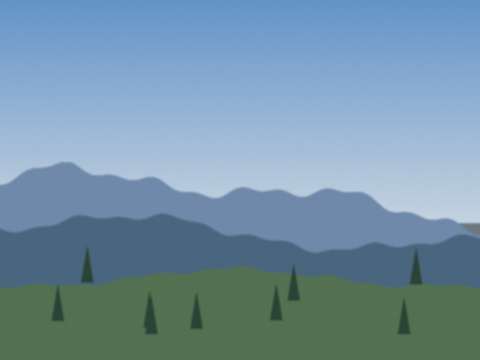 The north slope of the Talas Alatau above Kara-Buura. The glacier is behind the second ridge.
Thirty-five years ago tonight, a lake under the Sary-Say glacier broke through its moraine. In the morning the herding village of Sary-Say, about 700 people, was under the mud. The newspaper of that time wrote "a flood at a remote brigade" and forty-one dead.
The village doctor, Toktokan Ergesh kyzy, was at a calving camp that night. She came down and wrote the names she could get from the survivors, for weeks. In 1989 a newspaper printed her list. It has about three hundred names.
For the 7th class this term: why do we study this in a history lesson, not only in geography? Because a number written in a hurry is also a source, and the list of a doctor is also a source. We compare the two. The survivors raised a cross on the mud in 1990. This year, for the first time, they could hold a prayer there with arrangements by the UN people.
Posted in Our valley | 1 Comment »
May112008
Sunday, May 11th, 2008 at 8:00 pm by Saltanat Kubanychbekovna
Fourth year of the National Graduation Test. My advice to the 12th class for the history paper:
- Dates: learn the big ones (751, 1727, 1864, 1876, 1916, 1925, 1992), and learn what happened before and after, not only the number.
- Read the question two times. "Explain" is not "describe".
- Sleep the night before. A tired head remembers nothing.
- Bring two pens. Always two pens.
Good luck, children. I believe in you (more than you believe in yourselves).
Posted in Exams | 1 Comment »
Mar202008
Thursday, March 20th, 2008 at 6:50 pm by Saltanat Kubanychbekovna
Since Monday the dollar costs 8.40 som, and not 5. The 10th class asked me, very seriously, if I am now poorer. Good question. I made it into a lesson, for the economics hour that I take for the absent colleague.
Task: a teacher earns 1,500 som. In dollars last week, and in dollars today. Then: the price of a kilo of flour, which has not changed yet. Who loses, who does not lose? Why do the shops write the price in som but think in dollars?
One boy said: "Eje, then the one who has a cow is happy." Yes. And the one who has a salary learns patience. It is history also, children. Remember what you felt this week.
Posted in Lessons | 1 Comment »